Tuesday, April 29, 2014


By Albert L. Hurtado

This book is a very detailed analysis of Indian demographics in early California.  Of primary importance is the interaction between Indians and Hispanics compared to the interaction between Indians and Americans.  Although Indians did not experience benevolent behavior by explorers from any European nation, Hispanics were more prone to marry Indians.  Their children were known as “mestizos” and were welcomed into Hispanic society; however, they occupied a class lower than that of the “pure” Spanish people.

The author pointed out that most of the Spanish settlements in California took place near the coast.  Indians of the interior had little interaction with these early settlers, except for occasional raiding parties.  The Gold Rush changed everything.  It brought an influx of people from all parts of the world and with them their prejudices and diseases.  The prime gold producing areas of California were in the interior and directly affected those Indians who had remained free of the control of the missions and ranchos.

Initial Spanish settlements started in 1769 with the Portola Expedition.  As a result, the Spanish established presidios, pueblos and missions.  The missions used Indian labor for construction and agriculture work, with an aim to also convert them to Christianity.  The Indians were promised land of their own as they were converted from hunters and gatherers to farmers and craftsmen.  With the secularization of the missions under the new rule by the Mexican government, this promise was broken.  The Indians could not compete with the influx of Mexican citizens and others who were given land grants, such as Rancho La Puente.

The cession of California to the United States after the Mexican War shut the door to California Indians.  The influx of Americans, along with their antipathy towards Indians, effectively shut the Indians out of American society, except as low-paid wage earners.  The Industrial Revolution would close that door as well.


By Hubert Howe Bancroft

This book is the third volume of a multi-volume epic history of California by this eminent historian. An experienced Homestead Museum docent with some background in California history will enjoy an informative description of California in the years just prior to the arrival of William Workman.

The main players in this historical pageant are the Mexican government, the Californios, the Catholic Church, the Native Americans and the newly arrived foreign settlers. This volume describes the interaction among these players that formed the California that greeted Workman who arrived in 1841.

The Mexican government tried to establish its rightful hegemony over this northern province; however, geography remained its greatest obstacle. Travel was by sea, although sailing north along the coast of both Baja and Alta California was then, and remains today, a treacherous endeavor. Ships often detoured to Hawaii and then proceeded north. Another obstacle was the Catholic Church, which, through its mission system, controlled much of the land and the Native Americans. The Mexican government tried to accelerate the rate of secularization, i.e. the conversion of land from religious to secular control.

Missionaries of the Catholic Church initially partnered with the Spanish explorers and helped settle Alta California by establishing the twenty-one missions. The Church developed wealth and power as it managed the missions and became the largest landowner. The Church also navigated treacherous political seas as the newly formed country of Mexico was finding its sea legs.

The Native Americans initially welcomed the newly arrived Spanish explorers. They worked with the missions with the home of learning skills and receiving land grants. When this was not forthcoming, many rebelled and escaped into the interior of California.

Over the years, Californios developed their own society given the great distance from the central government in Mexico City, preferring to be governed by one of their own. They also developed their own inter-state, economic and political, conflicts between the north and the south.

Foreigners, mainly men, began to arrive in California as ships, including whaling ships, sought to trade with the Californios.  They chafed under restrictions that required trade through Monterey and payment of tariffs. Eventually foreigners were accepted in California and established themselves as prominent citizens.


By Hubert Howe Bancroft

This book is the second volume of a multi-volume epic history of California by an eminent historian.  It is tedious and should be read with a general knowledge of early California.  A seasoned Homestead Museum docent with a good background in California history will find the book both useful and informative.

There is an intriguing story of a Russian Chamberlain Nikolai Petrovich Rezanoff who arrived in San Francisco in 1806 and fell madly on love with Dona Concepcion Arguello.  Rezanoff had more than connubial bliss on his mind, since her father was the Commandant of San Francisco.  He was set to return to Russia and return to California for the wedding.  Dona Concepcion waited in vain.  Rezanoff had died en route to Moscow and Dona Concepcion joined a nunnery and administered to the sick and poor.

During this period, the mission system was completed with the construction of the mission at Sonoma.  The twenty-one missions (listed by Walter Temple on the mission walkway around La Casa Nueva) were near the coast and supported the coastal presidios and pueblos.  Spain, and then Mexico, was slow to explore and settle the interior, where Native Americans found refuge from the mission priests.

Also, this period saw the onset of foreign visitors arriving by sea.  Laws prohibiting foreign trade were difficult to enforce and smugglers traded with the Californios from San Diego to San Francisco.  As previously noted, Russians settled north of San Francisco at Fort Ross and English fur traders populated what is now western Canada.  The Onis-Adams Treaty of 1819 would set the northern boundary of New Spain at the 42nd parallel, which is the current northern boundary of California.

California was far from the political tumult of Mexico City, which culminated in the start of the Mexican revolution on September 16, 1810 and Mexico’s ultimate independence.  Californios remained above the fray and operated somewhat independently from Mexico City.  The revolution also began the groundswell for the secularization of mission property.  This release of property to Mexican citizens enabled John Rowland and William Workman to become major landowners in southern California.

Monday, April 28, 2014

By Hubert Howe Bancroft

This book is the first volume of a multi-volume epic history of California by an eminent historian, whose name adorns the history library at UC Berkeley.  It is a tedious read and should not be undertaken lightly.  A general knowledge of early California is recommended.  A seasoned Homestead Museum docent with a good background in California history will find the book both fascinating and helpful as a research tool.

The book starts with the exploration of California by Juan Cabrillo fifty years after Columbus discovered the new world and concludes with the establishment of the missions.  The time span of 258 years is almost overwhelming.  California was only a small part of New Spain, which contained what is now Mexico and the American West, and was of only minimal concern to Spain, mainly as a station for the Manila galleon to repair and take on supplies on its annual trek from the Manila to Acapulco.  As other European countries started exploring the Pacific Ocean, Spain decided that it must extend its system of presidios, missions and pueblos north to Alta California.  Geography and hostile native Americans made this a difficult proposition.

We learn a great deal about California as the author traces the explorations of Portola and De Anza as they established the presidios, missions and pueblos that are familiar to us today.  As the thirteen colonies on the East Coast were carving out a new nation, Californios, apparently oblivious to this revolution, were content with their squabbles with Mexico City and recalcitrant native Americans.

Pedro Fages was governor of California from 1782 to 1790, during which time his wife accused him of “sinful intent” with an Indian servant-girl.  Two centuries later, in keeping with tradition, the governor of California was accused of consummating his sinful intent with his housekeeper.

The reader of this volume should not be deterred by the excruciating detail provided by the author, but rather focus on broader themes, such as the role of the Catholic Church in secular affairs, the physical isolation of California from both Mexico City and the rest of the world and the social castes comprised of Spaniards, Indians, blacks and every permutation thereof.

Sunday, April 27, 2014


By Robert Glass Cleland

This book covers the history of California from 1542 to 1900.  The author discusses the early explorers such as Cabrillo, Drake and Vizcaino and how the struggle for hegemony on the seas by Great Britain and Spain affected the settlement of California.  These countries as well as Russia and France had their eyes on California and prompted Spain to colonize its far-flung empire.  Both Great Britain and Spain believed there was a “Northwest Passage” that would allow northern European countries to enter the Pacific Ocean and disrupt Spain’s lucrative trade with Asia.

Great Britain was in a favorable position, once they defeated the French and acquired Canada.  They believed in their manifest destiny to control the vast Canadian territory all the way to the Pacific coast, claiming all the land from Alaska to the California border.  Russia pulled out of California since they were overextended, ultimately selling Alaska to the United States.

To counter this interest in California, Spain sent overland expeditions into California, first led by Portola (who gave us the place name “Puente”), then the de Anza expeditions that brought families into California.  A short time later a few Americans came west.  Initially these were trappers who were not interested in settlements.  Also arriving were Americans and Europeans who settled as part of the sea trade with Hawaii and Asia.

The Spanish settlers differed from their counterparts from Europe who settled North America.  Spanish settlers were more apt intermarry with the native Americans, although a distinct caste system was enforced in New Spain.  European immigrants to California intermarried with Californios and reaped the benefit of strategic marriages and the inheritance of land.

California’s splendid isolation finally gave way as gold was discovered and folks from around the world arrived changing California forever.  At first these changes affected only northern California as southern California remained tied to its Mexican heritage.  The transformation of southern California occurred with the completion of the railroad and land boom of the 1880’s.  This book provides an excellent background source for the Homestead Museum docent.


By Carey McWilliams

This book is a compilation of essays written by Carey McWilliams.  These essays were written over the period from 1946 through 1966, with an afterword written in 1979.  The essays provide a contemporary view of California from an admittedly socialist point of view.  The author found that society did match his utopian view of what a benevolent socialist society should look like.

What is woefully lacking is a description of southern Californian life during the time period within the Homestead Museum’s scope.  The author does touch upon the revival of Spanish folkways in ceremonial reenactments, spiritual revivalists, like Aimee Semple MacPherson and the politics of water, including the works of William Mulholland.  These are important topics, but the reader must know that these are not a balanced presentations, but rather are tirades from the author’s viewpoint.

Most of the book is taken up with essays covering immigration (comically out of date), crime (covered much better in “The Grapes of Wrath”) and politics (left is good; right is bad).  The book is important as a history of political thought and opinion.  It is difficult to see how this book can help Docents to interpret the mission of the Homestead Museum, which is to strive to better understand the past (defined as the period of 1830 to 1930) and people’s ability to shape history.

The Foreward was written by the son of the author in 2001.  It would have helped had he updated each essay for current reality.


by Bayard Taylor

El Dorado by Bayard Taylor is a first-hand account of early California written by as a correspondent of the New York Tribune who traveled to California as part of the gold rush of 1849.  An experience world traveler, Mr. Taylor sailed from New York to Panama; crossed the isthmus of Panama and then sailed to San Francisco.  After arriving in San Francisco, he headed to the gold mining region of the Sierra Nevada.  Having spent time among the miners, he traveled throughout California and Mexico.

In his travels through California, he encountered a state in transition from the days of the Mexican ranchos to the settlements of Americans who had migrated there from the other thirty states.  The Mexicans were simply overwhelmed by the immigrants to California who came to pursue their dreams of riches promised by the discovery of gold.  There was a quick realization that miners were not getting rich, but those who supplied the miners did flourish.  This calls to mind William Workman who also made his fortune running cattle north and supplying the miners with beef.

This book is an important eye-witness account described by the journalist’s trained eye for detail.  Docents at the Homestead Museum will find this book interesting and will be provided with a glimpse of California and its early settlers during a time of gold-induced exuberance.  These settlers were tasked with creating a state and a civilized society.

By Clark Davis

“Company Men” explores the history of the development of the white-collar worked from the onset of large corporations through the Great Depression.  As we examine history at the Homestead Museum, we begin with the subsistence agriculture of the native Americans, continue with the barter economy of the “rancho era” and finish with the incredible wealth of Walter Temple generated by a large corporation.

The book traces the history of five corporations and their struggle to find and keep competent employees.  It is interesting to note that SoCal Edison and Pacific Mutual Life exist today whereas Pacific Electric, Security First National Bank and Union Oil have either been absorbed by another corporation or has gone out of business.  While corporations were maturating, America was changing from a rural society to an urban society.  American workers had to learn to work together in large companies, to set aside their personal goals and to focus on corporate goals.

Of course, during this earlier period, employees meant “white employees”.  It took another 20 to 30 years for that paradigm to change to include a more “diversified” employee base.  Early employees struggled to find their new identity within the large corporation and within the newly developing suburbs of Los Angeles.  The struggle was both work-related and social as the corporations stratified its workforce, especially separating jobs for men and women.  This book provides a good insight into management’s view of work and workers.

Saturday, April 26, 2014


By Remi A. Nadeau

This book, written by a descendent of a Los Angeles pioneer, a city-maker, details the men who transformed Los Angeles from a Mexican village to an American metropolis during its first great boom from 1868 to 1876. For the Homestead docent, the book is a treasure of information on the business activities of F.P.F. Temple.

The author discusses the economic life of Los Angeles and environs, starting from the rancho days of trading hides and tallow for finished goods with the traders who sailed into the port of San Pedro. There was no market nearby for the beef. Once the gold rush was going in full steam, a market developed and the ranchers flourished. Floods followed by two years of severe drought in the early 1860’s devastated the ranchers, who were land rich and cash poor. They subdivided their ranchos as newcomers arrived in southern California following the Civil War. The added financial transactions created a demand for a banking system.

The development of lead and silver mining in Inyo county provided an economic boon to Los Angeles as ore was transported through Los Angeles to San Pedro. Los Angeles managed to fend off competition from Ventura and Bakersfield, which envisioned a connection via the Southern Pacific to Sacramento. More importantly Temple was involved with the creation of a railroad running from Santa Monica to Inyo County, with control of the Cajon Pass. The Southern Pacific initially planned to bypass Los Angeles on its eastward march on a southern route back east. 

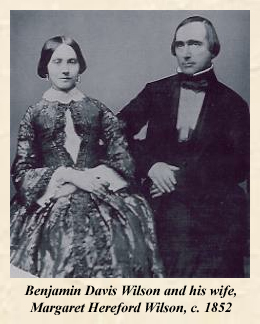
Benjamin Wilson, who traveled with Workman and Rowland to California, made sure that enabling legislation granting a charter to the Southern Pacific, required the railroad to connect with Los Angeles. That road proceeded south from Bakersfield through the San Fernando pass. 

In the end, the Southern Pacific gained control of the upstart railroad, dismantling port facilities at Santa Monica and abandoning the line to Los Angels. With a railroad, Los Angeles attained a position of dominance over both San Diego and San Bernardino. Los Angeles was now poised to benefit from transcontinental passenger and freight traffic.

The railroad solved Los Angeles’s need for fast and reliable transportation. The drought during the 1860’s focused the attention on the next hurdle in the growth of Los Angeles-the need for water. That problem would be solved by the next generation of city-makers.


By Carey McWilliams

‘California: The Great Expectation’, written in 1949, is a history of the state of California from the Gold Rush through the post-World War II years.  Carey McWilliams is not only a historian but a social critic with definite opinions about the course of California and prospects for its future.  It is interesting to reflect on California history for the last sixty years since the book was published.

In the author’s opinion, the Gold Rush was the seminal event of the history of the state.  As a result, the population soared as immigrants from around the world sought their fortune.  In a little over two and a half years, California went from a lightly populated and isolated spot in the world to the 31st state of the Union, firmly establishing the United States on the Pacific coast confirming its Manifest Destiny.  California quickly dominated the West with the liquidity of its gold that financed capital-intensive silver and copper mining throughout the West.  

This discussion of the effects of the Gold Rush provides a ‘Mother Lode’ of information for the docents of Homestead Museum as they discuss events in the Workman House.

The author also explains how California’s geography (including weather) helped make it a leading player in the world, notwithstanding on-going problems of immigration, water and energy.  Sixty years after Carey McWilliams wrote about these problems, California has reached into the West to solve its energy needs, but still struggles with immigration and water.


By Robert Glass Cleland

This book is one of a series of books the author has written about the history of California.  This volume covers, in a broad overview, four centuries of California history.  Because of that scope there is little detail for the reader.  However it does provide an excellent read on the large trends of history and the principal players in California history.

The author links the exploration of California into the international arena where England, France and Russia (and later the United States) challenge Spain’s hegemony in the so-called new world.  The incursions of these countries into “New Spain” was possible because of the vast territory that it encompassed and the paucity of Spanish settlers.  This was due in some part to the objective of Spanish colonialism where exploitation trumped settlement.  The English model promoted settlement to allow for a mercantile system of trade.  Ironically, the defeat of the Spanish Armada influenced the development of California and led to the establishment of California’s northern boundary (42 degrees latitude), dividing Spanish colonies from English settlements.  That boundary remains today.

The docent of the Homestead Museum covers California history from 1830 to 1930 and this book provides an overview of that period plus the approximately three preceding centuries.  The book shows how isolated California was from the rest of the world and how difficult transportation was.  People traveled in the same manner as the ancient Romans, on foot, on horseback and in small boats.

California’s development over the centuries came in fits and starts.  There were many booms and busts as settlers exploited the state’s natural resources and were overtaken by the march of history.

National and international events influenced California’s progress as nations eyed California’s resources, until the powerful United States acquired it from Mexico in a politically unpopular war.  California prospered as a result of the discovery of gold, the intercontinental railroad, the Spanish-American War, the annexation of Hawaii, the building of Panama Canal, the increased use of oil due to automobiles and airplanes, both World Wars, the development of the aviation industry and agriculture.  It all comes back to California.


By Geoffrey Perrett

The main thesis of the book is that the decade of the Twenties was, in fact, the real beginning of the Twentieth Century.  The Nineteenth Century ended with World War I.  This book will provide the Homestead docent with good background material for a discussion of topics in the 1920’s.

The author covers many of the important topics of the decade, including the peace treaty concluding Word War I, the influenza pandemic, the rise of unions and workers’’ rights, the popularization of radio, impact of spectator sports, issues of race and racism, the great black migration, the presidency of Calvin Coolidge and the resurrection of fundamentalist religion.

Economics was a major topic during the Twenties.  The U.S. became an international power and creditor nation as Europe laid in ruins and was preparing for another self-immolation.  The modern economy was born as major industries developed and America became more urbanized.  The stock market boomed as more folks “played the market”.  Optimism was boundless as heroes such as Babe Ruth and Charles Lindbergh demonstrated skill, ingenuity and the American can-do attitude.


The author, not surprisingly, devotes a great deal of the book to a discussion of the economic run-up to the Great Depression, the seminal event of the decade.  Herbert Hoover is shown in a somewhat favorable light, given that “no president had ever assumed responsibility for managing the American economy.  The business of government since 1776 had been limited to war, diplomacy, and foreign trade.  It was not expected to create prosperity.”  The author concludes that Hoover could be considered both the last president of the 19th Century and first president of the 20th Century, tackling an unprecedented task with tools from the previous century.

Friday, April 25, 2014


By Susanna Bryant Dakin


This is an interesting story of Hugo Reid, who once owned Rancho Santa Anita. The book provides an insight into the days of southern California both before and after annexation by the United States.  

Hugo Reid immigrated from Scotland, perhaps after losing at love, to Mexico.  On impulse, he sailed to the port of San Pedro in Alta California in 1832.  He was able to observe first hand the California of the Mission period, where the Missions controlled the land, which was worked by the Native Americans, known as neophytes.

Hugo Reid married Dona Victoria, who was a widow with two children.  More importantly she was a Gabrielino Indian.  Of course, as an immigrant, Hugo was a naturalized Mexican citizen and was baptized Catholic, taking the name, Perfecto.

Hugo Reid made a lasting contribution to the history of early California by publishing letters in the local newspaper that described the culture of the Gabrielino Indians and was critical of their treatment under the Mission system.

Governor Pio Pico granted Hugo Reid the land that became Rancho Santa Anita, which he ultimately sold to his former business partner, Henry Dalton.  Hugo Reid and William Workman became co-owners of the San Gabriel Mission, which Pio Pico sold to finance the defense of California from possible invasion by the United States.

Of interest is the author’s description of the attic of Reid’s adobe, “where red peppers were strung from the rafters...”, reminiscent of the rafters in the Workman House.


In this book, the author uses the year 1927 as the archetypical year of the Roaring Twenties.  If we believe that the past is indeed prologue, then the Twenties set the stage for modern America.  The author uses many examples to show how society, business and politics of 21st Century America had its antecedents during this decade.

America was being transformed from an agrarian society to an urban society.  Whether it should become an international society was a struggle with profound political and religious implications.  There were strong competing interests favoring an international role as well as an isolationist role.

The book begins with the prosperity and “normalcy” of the Coolidge administration.  Unfortunately Americans assumed that prosperity was the new normal and continue forever.  Ninety years later America faced the same dilemma.  That lesson is apropos of the Workman and Temple families and their respective financial problems.

Also discussed by the author are the impacts on society of the emerging rights movements affecting women and African Americans.  The decade began with women getting the right to vote and shedding the physical, emotional and societal constraints of the Victorian Age.  African American left the South and became the urban force which continues today.  Both groups began to define themselves rather than be defined by society’s elites.

The decade saw important technological developments in transportation and communication, such as the automobile, airplane, radio and television.  Full implementation would have to await the end of the Depression and World War II, but the seeds were planted in the Twenties.

The docent at the Homestead Museum will receive a clear picture of societal changes that affected the people of southern California and the Temple family.

Thursday, April 24, 2014

After I retired in late 2008, I decided to volunteer as a docent to spend productive hours. I became a volunteer docent at both the Workman and Temple Families Homestead Museum and the Nixon Presidential Library. 

My love of history has led me to read many books on a wide variety of historical topics, but I have focused a great deal of attention on California history. At the Homestead Museum, docents are encouraged to read books from its library and submit book reviews. My book reviews will be posted on this blog from time to time. Other book reviews will be posted as I see fit.

Thursday, August 14, 2008

Trip to Colorado, June 2008


We drove to Colorado via Flagstaff and Monument Valley. We experienced heat and snow. It was great.

http://picasaweb.google.com/tciarriocco/ColoradoJune2008

Friday, November 02, 2007

Tour of New England


We had an enjoyable time on our tour of New England. The weather was beautiful. Pleas click on the link below and enjoy the pictures we took.


Thursday, May 10, 2007

OCS Reunion

During the first week of May, I attended a reunion of my OCS class, which graduated in June 1970, in San Antonio, Texas. In addition to the Alamo and Riverwalk, we toured Fredricksberg, Luckenback, the LBJ Ranch and more missions.
Please click to view my pictures.

http://picasaweb.google.com/tciarriocco/OCSReunion2007

Friday, March 16, 2007

My 60th Birthday


Yesterday was my 60th birthday. We had a good dinner at the Derby Restaurant in Arcadia. These special birthdays are a time for reflection. I am very grateful for what I have in my life; not the material possessions, but mainly my family. I've got a wonderful wife and as fine a son that a man could hope to have.
My Mom is 83 years old and is doing fine. My brothers and sister are well. We have a strong, though quiet bond, among ourselves. I am blessed.

Sunday, March 11, 2007

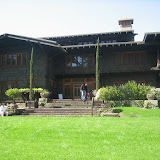
Gamble House in Pasadena

Gamble House
We visited the Gamble House in Pasadena on Saturday, March 10. Photos of the interior were not allowed.